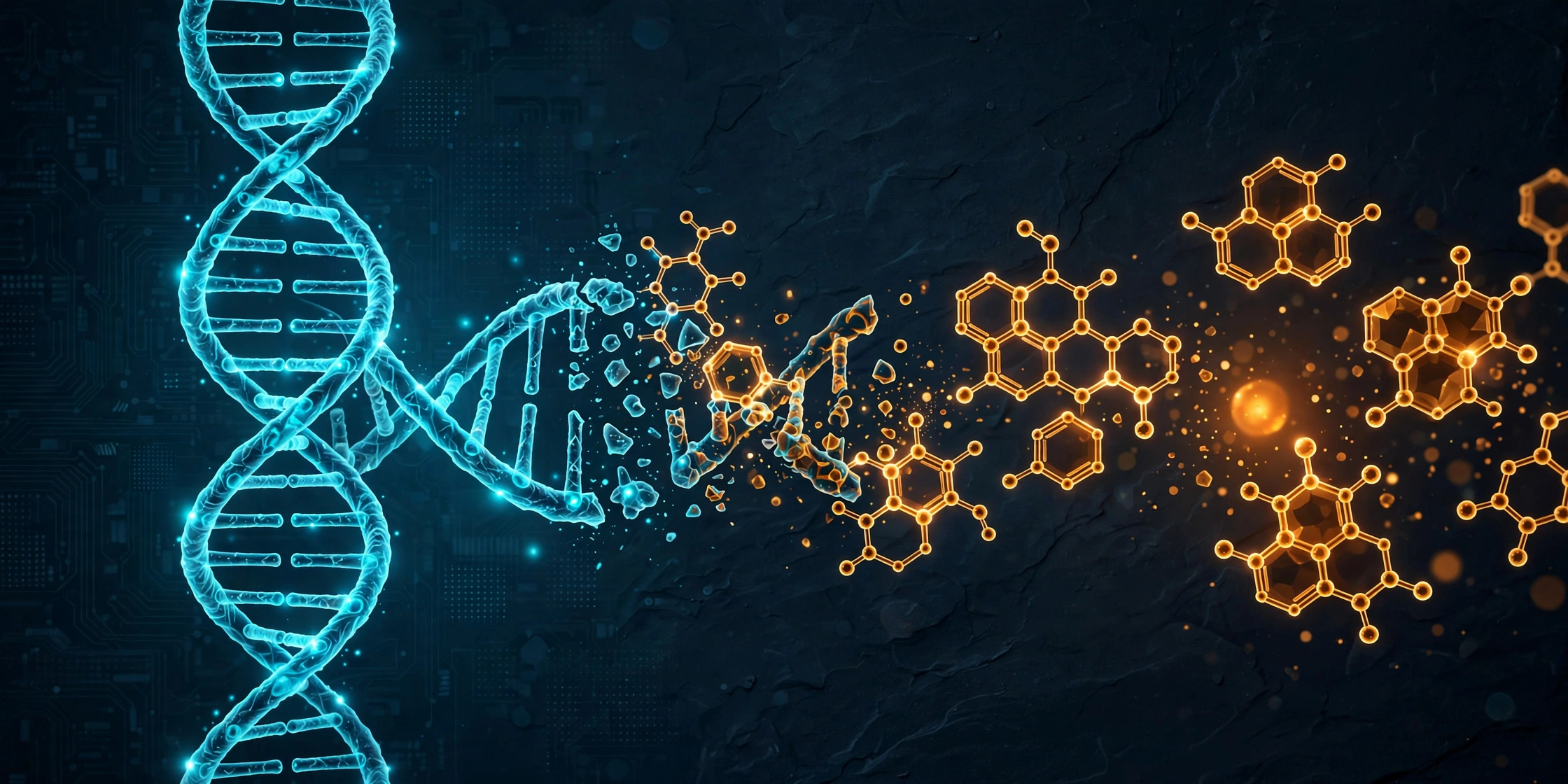
Gene Editing for Cholesterol: What the Science Actually Shows (and Why It Is Not a Biohack Yet)
The short answer on gene editing for cholesterol
Yes, it is real. A single intravenous infusion of an experimental medicine called VERVE-102 used a precise form of CRISPR called base editing to switch off the PCSK9 gene in the liver. In the Phase 1 Heart-2 trial, LDL cholesterol fell by up to 62% in a dose-dependent way, and the effect was still there about a year later. The results were published in the New England Journal of Medicine in May 2026.
But gene editing for cholesterol is not a biohack, and you cannot get it: it is an experimental hospital treatment tested in 35 high-risk patients with genetic cholesterol disorders, long-term safety is unproven, and Phase 2 trials are only planned to start by the end of 2026.
What the scientists actually did
Your liver uses a protein called PCSK9 to control how much LDL, the “bad” cholesterol, it pulls out of your blood. Some people are born with rare PCSK9 variants that keep the protein dialed down. They live with naturally low cholesterol and much lower lifetime heart-disease risk. The team behind VERVE-102, founded by cardiologist Sekar Kathiresan and now part of Eli Lilly, asked a bold question: what if one treatment could copy that genetic luck?
The tool they used is an adenine base editor. It is part of the CRISPR family, but instead of cutting both strands of DNA, it changes a single DNA letter. That tiny edit disables the PCSK9 gene in liver cells. The editor is packed into a lipid nanoparticle and delivered through one intravenous infusion. One dose, no repeats. That is the whole pitch. It is a bold bet, and it explains why gene editing for cholesterol has become one of the most watched frontiers in preventive medicine.
What the Heart-2 results showed
The published trial of gene editing for cholesterol enrolled 35 people with familial hypercholesterolemia or premature coronary artery disease, all of them already at high genetic risk. They received one of six doses, from 0.3 to 1.0 mg per kilogram, and were followed for at least 28 days for safety. Here is what the numbers said:
- PCSK9 protein fell by 51% at the lowest dose and 88% at the highest dose. More medicine, more gene shutdown. A clean dose-response curve is exactly what researchers want to see.
- LDL cholesterol fell by 9% at the lowest dose and 62% at the highest dose. In absolute terms, the top-dose group dropped by an average of 78 mg/dL.
- The effect lasted. In 15 participants followed for about a year, the reductions were still holding steady.
- Safety looked acceptable for this stage. There were no dose-limiting toxicities and no deaths. Reported adverse events were mostly mild or moderate infusion reactions and temporary bumps in liver enzymes.
One caveat the authors stated clearly: this was a small, open-label, single-ascending-dose study. Phase 1 proves a drug can do something in humans, not that it helps most people.
The part the hype skips
VERVE-102 is actually the second attempt. Its predecessor, VERVE-101, was shelved after its Phase 1 trial was voluntarily paused when one of six participants developed a transient Grade 3 rise in the liver enzyme ALT plus Grade 3 thrombocytopenia. A different delivery vehicle was blamed, which is why VERVE-102 exists.
The episode is a reminder that gene editing for cholesterol remains an early, high-stakes experiment. The current candidate looks cleaner so far, but 35 people and roughly one year of follow-up is thin evidence for a permanent edit to your DNA. Gene edits do not wash out the way pills do. If something unexpected shows up at year five or ten, you cannot stop taking it, because there is nothing to stop.
The regulatory road for gene editing for cholesterol is long. The FDA has granted VERVE-102 Fast Track designation, and Eli Lilly planned to start Phase 2 by the end of 2026. Even in the optimistic case, gene editing for cholesterol remains years away from any pharmacy shelf, and only for narrowly defined high-risk patients.
Why gene editing for cholesterol is not a biohack yet
Let me be direct, because the biohacking community tends to get ahead of the data. A biohack is something you can try, measure, and reverse. Gene editing for cholesterol is none of those things. You cannot order it, no clinic will sell it to you, and there is no legal “DIY” version that exists or will exist. The patients in Heart-2 were not optimizers chasing better numbers. They were people with genetic cholesterol disorders facing serious cardiovascular risk, treated in a hospital under trial protocol.
There is a real problem it might one day solve. Across lipid-lowering drugs, including PCSK9 inhibitor injections, an estimated 30% to 50% of people stop treatment within 12 months of starting. A one-and-done edit would sidestep the adherence problem entirely. But one-and-done is also the risk. Permanence is the feature and the warning label.
Frequently asked questions
When could this become available?
Phase 2 trials of gene editing for cholesterol were slated to begin by the end of 2026. Phase 2 and Phase 3 for a gene-editing therapy typically take years, and regulators require long-term follow-up for gene therapies. A realistic window is several years, and only for high-risk patients first.
Is there an approved one-dose cholesterol treatment anywhere?
No. All approved cholesterol treatments require ongoing dosing: daily pills, or injections every two weeks or monthly for PCSK9 inhibitors.
What can I do about cholesterol today?
The boring, proven list: eat less saturated fat and more fiber, exercise most days, keep a healthy weight, do not smoke, and talk to your doctor about statins or PCSK9 inhibitors if your numbers are high. The recovery side matters too. Poor sleep wrecks the metabolic systems that manage cholesterol, which is why we built our sleep debt science guide to help you fix the foundation first.
The bottom line for optimizers
File this under “watch, do not touch.” The Heart-2 data is genuinely exciting: a single-letter edit, a 62% LDL drop at the top dose, effects holding for a year. If Phase 2 and 3 confirm it, gene editing for cholesterol becomes one of the biggest stories in preventive medicine. But right now it is an experimental medicine for high-risk patients, tested in 35 people, with a shelved predecessor behind it. Keep optimizing the levers you actually control. The gene editors will keep, and when they are ready, we will be watching the data the way we always do: closely, and without the hype.
Health disclaimer: This article is for information only and is not medical advice. Gene-editing therapies are experimental and not available to the public. If you have concerns about cholesterol or heart-disease risk, speak with a qualified clinician.


One thought on “Gene Editing for Cholesterol: What the Science Actually Shows (and Why It Is Not a Biohack Yet)”