Sex Chromosomes, Cancer, and Longevity: What the New Study Means for Biohackers

What does the new sex chromosomes longevity research actually mean for biohackers? The short answer: your X and Y chromosomes are not just a birth-assignment system. They run active programs inside your cells that shape how fast you age, how your immune system fights cancer, and how your heart handles decades of wear. A landmark review published in Science on October 1, 2026 pulls this evidence together, and it changes how serious longevity research thinks about the male-female lifespan gap. Nothing in the review translates into a product or test you can buy today, but it tells you exactly where the next generation of aging diagnostics is headed, and which habits already touch these mechanisms.
The study: “X and Y chromosomes as determinants of aging and disease”
The paper is a synthesis review, not a single new experiment. It was co-led by Dr. Dena B. Dubal of the University of California, San Francisco and Dr. Dan Theodorescu, director of the University of Arizona Cancer Center, with co-authors from Harvard Medical School and the Oklahoma Medical Research Foundation. The review grew out of a 2025 National Institute on Aging workshop on sex differences in health across the lifespan. Its full citation: Dubal et al., “X and Y chromosomes as determinants of aging and disease,” Science (2026), DOI 10.1126/science.aeh0145.
The central shift is straightforward. For decades, differences between men and women in health were pinned almost entirely on circulating hormones like estrogen and testosterone. The review shows that genes on the X and Y chromosomes exert their own effects inside cells, independent of hormones, working both alone and alongside them. Those chromosomal effects reach aging, cancer, brain disorders, immunity, and cardiometabolic disease. “Our review shows that these chromosomes carry genetic instructions that shape how our cells age and how our bodies defend against major diseases throughout our lives,” Theodorescu said in the announcement of the review.
Why the “silenced” X is not really silent
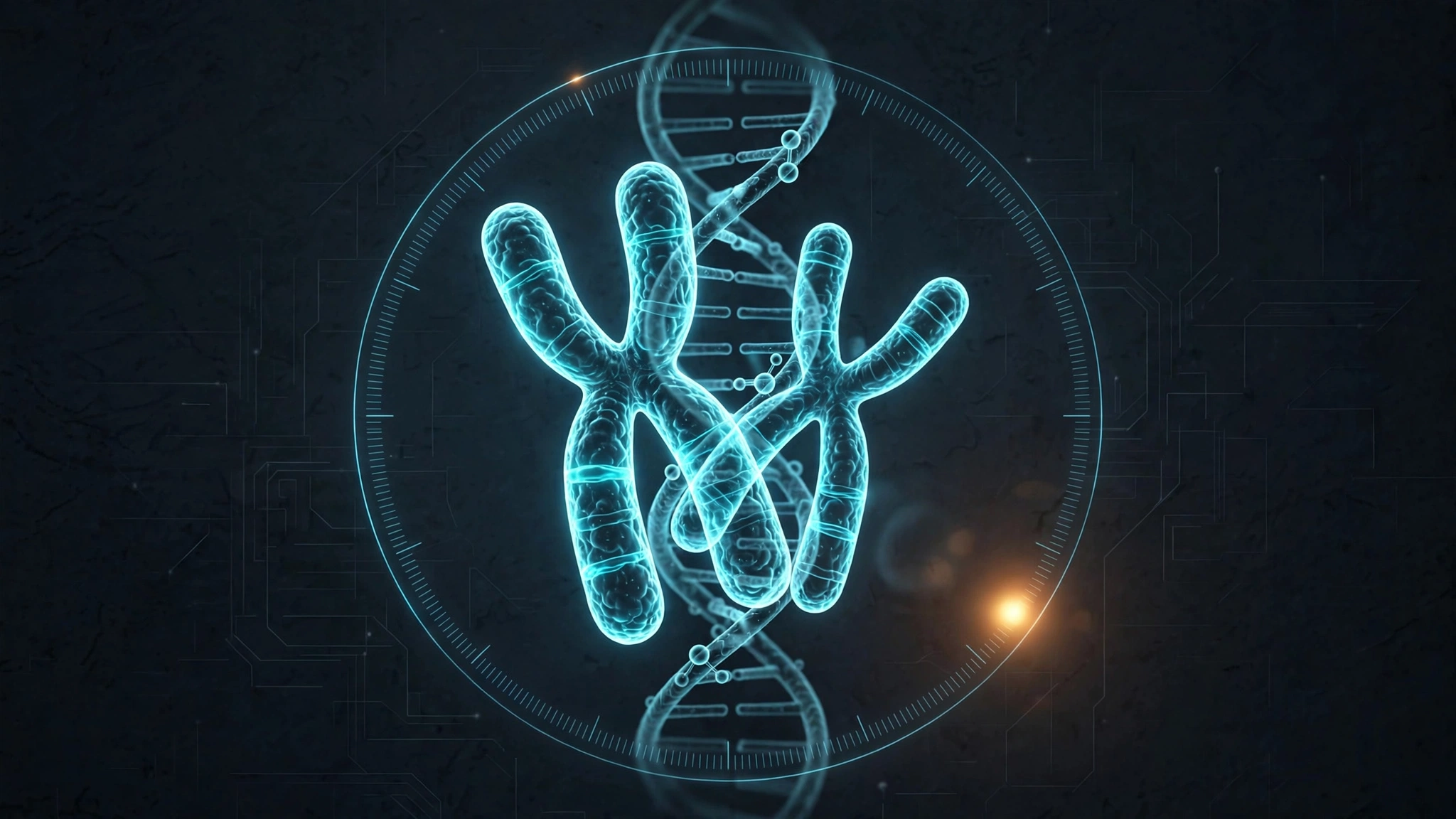
The X chromosome carries roughly 1,500 genes, about 5 percent of the human genome. In people with two X chromosomes, one copy is largely switched off early in development, a process called X chromosome inactivation. For decades scientists treated that shutdown as final. It is not.
In humans, about 15 to 30 percent of the genes on the switched-off X keep working anyway, a phenomenon called escape from X chromosome inactivation. That gives female cells extra doses of certain genes throughout life. And the picture shifts with age: in both mice and people, some genes on the silenced X reactivate later in life, a process the review terms X chromosome reactivation. The authors describe this as a lifespan-dependent source of sex differences in aging and disease.
One gene illustrates why this matters. KDM6A escapes inactivation and is expressed at higher levels in female brains than male brains, in both mice and humans. In people, a genetic variant that raises KDM6A levels in the brain is associated with holding on to thinking skills despite Alzheimer’s disease. In mice with Alzheimer’s-like disease, boosting KDM6A reversed cellular and memory impairments, and notably the protection worked in males too. The same gene also suppresses tumors in some tissues and is frequently mutated or lost in bladder, kidney, and blood cancers. Its higher dose in women may partly explain their lower rates of certain cancers.
The mother’s X and the aging brain
Every female cell keeps either the mother’s X or the father’s X active, a mosaic pattern. Male cells have only the mother’s X. The review pulls together mouse experiments showing this matters more than anyone expected. In female mice whose cells relied mostly on the mother’s X, brain aging accelerated and memory declined faster. Turning up the genes that the mother’s X had silenced improved memory in old female mice.
The researchers also used a clever genetic setup called the four core genotypes model, which uncouples chromosomal sex from gonadal sex in mice. In those animals, having two X chromosomes increased survival no matter which reproductive organs the mice had. That finding, reported in the review, is one of the strongest lines of evidence that the chromosome complement itself, not just hormones, helps explain why women outlive men across countries and even across famines and epidemics.
Men lose the Y, and that loss tracks with disease
The Y chromosome is small and was long viewed as little more than the switch for male development. The review documents how wrong that view was. With aging, many men gradually lose the Y chromosome in a fraction of their cells. This mosaic loss of Y, measured most often in blood, is the most common somatic chromosomal change in aging men, becoming common by the seventh decade. Y-linked genes include dosage-sensitive partners of X-linked genes that regulate chromatin, transcription, and immune signaling, so losing the chromosome degrades real cellular machinery.
The strongest known environmental driver of Y loss is smoking, and the effect is dose-dependent and partly reversible. Loss of Y shows up more often in men with heart disease, cancers, severe infections, and Alzheimer’s disease. In mouse experiments, removing the Y from blood cells accelerated heart damage and shortened lifespan. Here the review is careful: most human studies of Y loss are observational, so they cannot prove it causes disease rather than marking a body that is aging. But the convergence between human epidemiology and mouse experiments is unusually tight.
Cancer: tumors without a Y behave differently
For the cancer angle, Theodorescu’s own laboratory provided key data. Men develop many common cancers more often than women and die of them more often, including bladder, liver, stomach, and esophageal cancers. His group found that cancer cells missing the Y chromosome wear out the immune cells that would otherwise kill tumors. Those same tumors, in animals and in patients, responded better to drugs that release a brake on the immune system, known as immune checkpoint inhibitors. A 2025 study also found Y loss in the noncancerous cells surrounding tumors, where it predicted worse outcomes.
The practical consequence is already arriving. Some immunotherapy trials now sort patients by features such as how many of their cells have lost the Y, and the review argues that Y chromosome status could eventually serve as a biomarker to guide treatment decisions. On the X side, the KDM6A gene’s tumor-suppressing role in bladder, kidney, and blood cancers adds to the picture of chromosomal dosage shaping cancer risk. This is one reason the review frames its findings as an argument for sex-aware clinical trial design, so that treatments are matched to each patient’s actual biology.
Immunity and the heart: the same chromosomes, many diseases
The review shows the same chromosomal themes repeating across seemingly unrelated conditions. Women mount stronger immune responses than men, which helps them fight infections and respond to vaccines but raises the risk of autoimmune diseases such as lupus and rheumatoid arthritis. The X chromosome carries many immune genes, and people born with an extra X have more autoimmune disease. Some patients with autoimmune disease also carry antibodies against a molecule the X produces while it is being switched off, and those antibodies could one day become an early warning test.
Heart disease follows the same pattern. In mice, two X chromosomes led to more damage when blood flow was cut off and more weight gain on a high-fat diet. Losing the Y has been linked to heart scarring in both mice and men. “What surprised me most was how frequently the same biological themes appeared across seemingly unrelated diseases,” Theodorescu said. “I think the broader lesson is that we have underestimated the biological importance of sex chromosomes for decades.”
What the sex chromosomes longevity findings mean for biohackers
This is where a biohacker’s mindset needs to separate signal from hype. The review is a roadmap for researchers, not a protocol for you. There is no consumer test worth buying yet, and Theodorescu explicitly cautioned that patients should not rush to seek genetic testing because these discoveries are still making their way into clinical practice. That said, a few conclusions are already actionable:
- If you smoke, the chromosomal argument is one more reason to quit. Smoking is the strongest known environmental risk factor for losing the Y chromosome, and the effect is dose-dependent and partly reversible. Nothing else in your control touches these pathways this directly.
- Watch the biomarkers space. The review flags Y loss status and X-skew (the imbalance between maternal and paternal X expression, which becomes more common in women’s blood with age) as candidate biomarkers of aging and disease risk. When validated panels arrive, they will sit naturally alongside the biological age clocks you may already track. If you follow aging clocks and measures of biological age, these chromosome-based readouts are the next frontier to watch.
- Expect sex-aware trials to become normal. The authors want future clinical trials to record each patient’s X and Y status and to be large enough to spot treatments that work differently in XX and XY patients. When you evaluate any longevity intervention, start asking whether the evidence holds for your chromosomal profile, not just your sex on paper.
- Do not overinterpret the female longevity gap. Two X chromosomes increase survival in mice regardless of hormones, which is real and important. It is not a license for fatalism in men or complacency in women. The mechanisms point at specific genes like KDM6A that protected male mice too, which is exactly the kind of target drug developers now have a reason to pursue.
- Keep the fundamentals boring. Protein intake, training, sleep, and metabolic health remain the levers with proven effect sizes today. The chromosomal findings help explain why those levers sometimes work differently between people, but they do not replace them. If your nutrition is a lever you track, our piece on protein intake and longevity covers what the evidence actually supports right now.
A research-news disclaimer
This article reports on a published scientific review. It is research news, not health advice, and it does not diagnose, treat, or prevent any condition. The findings summarized here come from a synthesis of earlier studies, many of them in mice, and most of the human evidence on chromosome loss is observational, which cannot prove cause and effect. Do not change medication, order genetic testing, or start any supplement based on this article. If a finding here seems relevant to your health, discuss it with a qualified clinician who knows your history.
Frequently asked questions
What did the new Science review on sex chromosomes actually find?
The review, co-led by researchers at UCSF and the University of Arizona Cancer Center, synthesized existing evidence showing that genes on the X and Y chromosomes directly shape aging, cancer, immunity, brain disorders, and heart disease, independent of sex hormones. Key findings include escape and reactivation of genes on the “silenced” X with age, faster brain aging in mice dominated by the maternal X, and links between age-related Y chromosome loss and cancers, heart disease, and Alzheimer’s.
Why do women live longer than men?
The review points to chromosomes as part of the answer, not the whole one. In mice with matched reproductive organs, having two X chromosomes increased survival regardless of hormones. Extra doses of X-linked genes such as KDM6A may protect the brain and suppress tumors, while men face age-related loss of the Y chromosome, which is linked to heart and cancer risk. Environment, behavior, and hormones still matter enormously.
Can I test whether I have lost my Y chromosome?
Not in any clinically useful way right now. Y loss is measured in research settings, usually in blood cells, and methods vary between laboratories. The review’s authors note that single measurements, European-ancestry study populations, and uncertainty about whether blood reflects other tissues all limit current testing. The lead author explicitly advised against rushing to seek genetic testing.
Does Y chromosome loss cause disease, or just mark aging?
Nobody knows yet for certain. Most human studies are observational, so they cannot separate causation from correlation. Mouse experiments support a causal role, where removing the Y from blood cells accelerated heart damage and shortened life. The review treats chromosome loss as both a potential biomarker and a potential contributor to age-related disease.
What is the one actionable takeaway for men and women?
Do not smoke. Smoking is the strongest known environmental driver of Y chromosome loss, it is dose-dependent, and the effect is partly reversible. Beyond that, treat this research as a reason to follow the coming wave of sex-aware diagnostics and trials rather than as a reason to change anything today.